
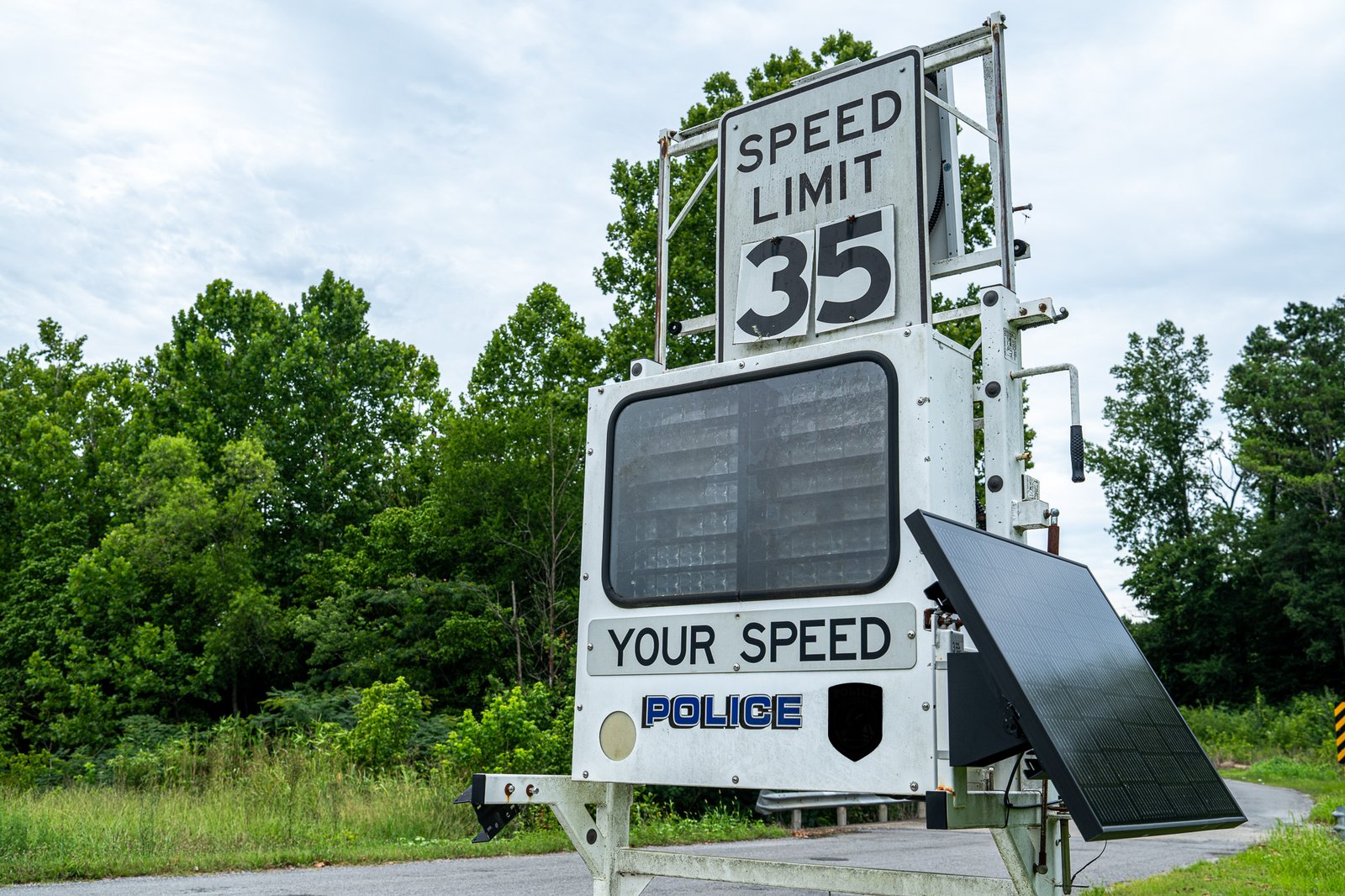
ONEONTA, Ala. — Motorists traveling through Oneonta may have noticed a familiar piece of traffic-calming equipment sporting an unfamiliar attachment: a mobile radar speed display trailer equipped with a solar-powered Flock Safety automated license plate reader (ALPR).
At first glance, the pairing has sparked questions among local drivers regarding the trailer’s exact function—specifically, whether automated cameras are quietly being integrated with speed detection equipment to monitor lead-footed drivers.
How the Technology Works
Digital speed display trailers have long been used by municipal law enforcement and county road departments to remind drivers of the posted limit and collect anonymous traffic volume data.
The Flock Safety camera mounted to the side of the unit serves a different primary purpose. ALPR cameras are designed to photograph passing vehicles, record license plate numbers, and run them against national and state law enforcement databases for stolen vehicles, active felony warrants, and Amber or Silver alerts.
While standard Flock cameras are often permanently fixed to utility poles or standalone solar posts, mobile trailers provide law enforcement agencies with a turnkey power source and the flexibility to position an ALPR node anywhere in the municipality without running dedicated electrical infrastructure.


The Legal Landscape in Alabama
Under Alabama state law, the presence of a camera on a speed trailer does not mean drivers will receive automated speeding tickets in the mail.In Alabama, automated photo-radar systems require specific enabling legislation passed by the Alabama State Legislature for an individual municipality before civil speeding citations can be mailed. Furthermore, speeding in Alabama remains a criminal misdemeanor (Ala. Code § 32-5A-8), meaning officers generally cannot retroactively cite a driver days after the fact based on unverified, matched data logs.Public Questions and Transparency
Despite statutory limitations on automated ticketing, the hybrid setup highlights ongoing community discussions surrounding automated surveillance networks and data segregation.
When speed-logging radar hardware and plate-scanning cameras share the same physical platform, questions naturally arise regarding whether speed timestamps and plate captures could ever be cross-referenced, or if the technology serves as a tool to identify target vehicles for subsequent patrol stops.